How to Choose the Right Aluminium Scaffolding for Your Project
Choosing Aluminium Scaffolding Based on the Work Requirement
Aluminium scaffolding is widely used for construction, maintenance, installation, repair and industrial access because it combines strength with relatively low structural weight. However, selecting a scaffolding system only on the basis of working height can result in an unsuitable setup.
The correct system should be selected after considering the working area, available floor space, access method, required platform size, site obstructions and the nature of the work being performed.
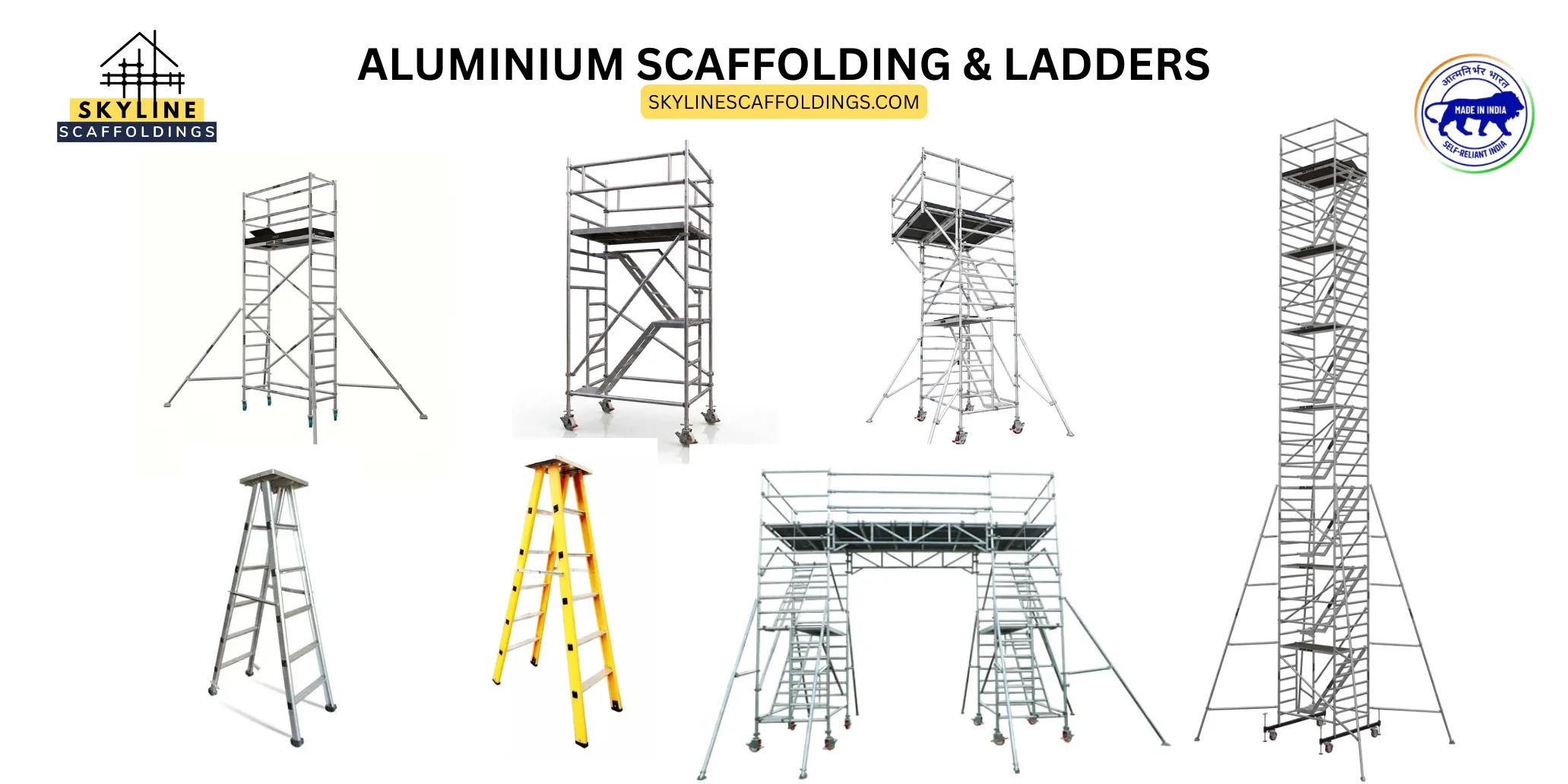
Skyline Scaffoldings supplies aluminium scaffolding systems for sale and rental for different access requirements, including narrow towers, stairway systems, cantilever arrangements, bridge scaffolding and extra-reach configurations.
1. Start With the Required Working Height
Working height is the first specification to consider, but it should not be the only one.
Before selecting a tower, identify:
- the height at which the work will actually be performed,
- the required platform level,
- whether the tower will be used indoors or outdoors,
- whether the height requirement changes during the project,
- and whether the site has sufficient space for stabilisers or outriggers.
For taller scaffolding systems, stability becomes increasingly important. The complete configuration should therefore be selected according to the intended working conditions rather than simply increasing tower height.
2. Check the Available Space at the Site
Many construction and maintenance locations have restricted working areas.
A standard-width scaffold may not be practical in:
- corridors,
- industrial passages,
- warehouses,
- commercial interiors,
- plant rooms,
- narrow building spaces,
- or areas between installed machinery.
For such locations, Narrow Scaffolding (SKY-N Series) can provide access where a wider tower cannot be conveniently positioned.
You can learn more about our narrow scaffolding systems here:
3. Decide How Workers Will Access the Platform
The method used to reach the working platform is another important consideration.
For regular maintenance or moderate working heights, conventional tower access may be sufficient. For projects where workers frequently move between multiple platform levels, a stairway configuration can make vertical access more practical.
Stairway or Double Width Scaffolding (SKY-S Series) is suitable where additional platform space and structured vertical access are required.
The selection should consider the number of workers, tools being carried and the frequency of movement between levels.
4. Consider Obstructions Around the Work Area
Not every job can be approached directly from underneath.
Building projections, machines, roofs, balconies, fixed equipment and architectural features can prevent a standard scaffold tower from being positioned immediately below the work location.
For these situations, specialised configurations may be required.
Cantilever Scaffolding
Cantilever Scaffolding (SKY-C Series) is designed to extend the working platform outward where the scaffold base cannot be positioned directly under the work area.
Extra Reach Scaffolding
Extra Reach Scaffolding (SKY-E Series) can be considered where additional working reach is required around difficult structural or architectural conditions.
The exact configuration should always be determined after understanding the physical site conditions.
5. Determine Whether a Wider Working Platform Is Needed
Some activities require more than simple vertical access.
Workers may need room for:
- tools,
- equipment,
- materials,
- movement along the platform,
- or multiple personnel.
In such cases, platform width and working area become important factors.
Where work needs to span a wider opening or gap, Bridge Scaffolding (SKY-B Series) can provide an elevated working platform between scaffold structures.
This type of arrangement can be useful for maintenance, installation and access work where the space below the working platform needs to remain usable.
6. Decide Whether the Scaffold Needs to Be Mobile
One of the major advantages of aluminium mobile scaffolding is that a properly configured tower can be repositioned between work areas instead of repeatedly dismantling a fixed access structure.
Mobility can be particularly useful for:
- warehouses,
- factories,
- shopping centres,
- hotels,
- airports,
- commercial buildings,
- industrial facilities,
- and maintenance projects.
However, the scaffold should only be moved according to appropriate operating procedures and site conditions.
The wheels, brakes, stabilisers, outriggers and overall tower configuration must all be considered as part of the complete system.
7. Consider Whether You Need Scaffolding on Rent or Purchase
The right commercial option depends on how frequently the equipment will be used.
Aluminium Scaffolding on Rent
Rental may be suitable for:
- short-duration projects,
- temporary maintenance,
- shutdown work,
- one-time installations,
- projects in different cities,
- or companies that do not want to maintain their own scaffolding inventory.
Skyline Scaffoldings provides aluminium scaffolding rental services for multiple project locations.
Purchasing Aluminium Scaffolding
Purchasing may make more sense for contractors, facility management companies, industrial organisations and maintenance teams that require regular access equipment.
When purchasing scaffolding, the required tower configuration, platform dimensions, working height and accessories should be finalised according to the intended application.
8. Do Not Ignore Safety and Stability Requirements
Scaffolding selection should always consider the complete working environment.
Important factors include:
- supporting surface,
- platform configuration,
- stabilisers and outriggers,
- access arrangement,
- wheel locking,
- guardrails,
- expected working conditions,
- and manufacturer instructions.
Skyline Scaffoldings provides EN1004-certified aluminium scaffolding systems designed for professional access applications.
A tower should not be modified, extended or configured using unsuitable components simply to achieve additional height or reach.
Aluminium Scaffolding Options Available From Skyline Scaffoldings
Depending on the project requirement, Skyline Scaffoldings offers specialised access solutions including:
- Narrow Scaffolding – SKY-N Series
- Stairway / Double Width Scaffolding – SKY-S Series
- Cantilever Scaffolding – SKY-C Series
- Extra Reach Scaffolding – SKY-E Series
- Bridge Scaffolding – SKY-B Series
- Aluminium A-Type Ladders – SKY-A Series
- FRP Ladders – SKY-F Series
We also provide aluminium scaffolding systems for rental and sale based on project requirements.
Choosing the Correct Scaffolding Configuration
There is no single scaffolding configuration suitable for every project.
A system that works well in an open construction site may not be appropriate inside a factory, narrow commercial space or around installed machinery. Working height, access, platform dimensions, mobility, surrounding obstructions and site conditions should therefore be considered together.
Before finalising your scaffolding requirement, share the work location, approximate working height, available floor space and type of activity with the supplier. This makes it easier to identify an appropriate configuration instead of selecting equipment only according to height.
For aluminium scaffolding requirements, rental enquiries or product selection assistance, contact Skyline Scaffoldings.